
 EN
EN



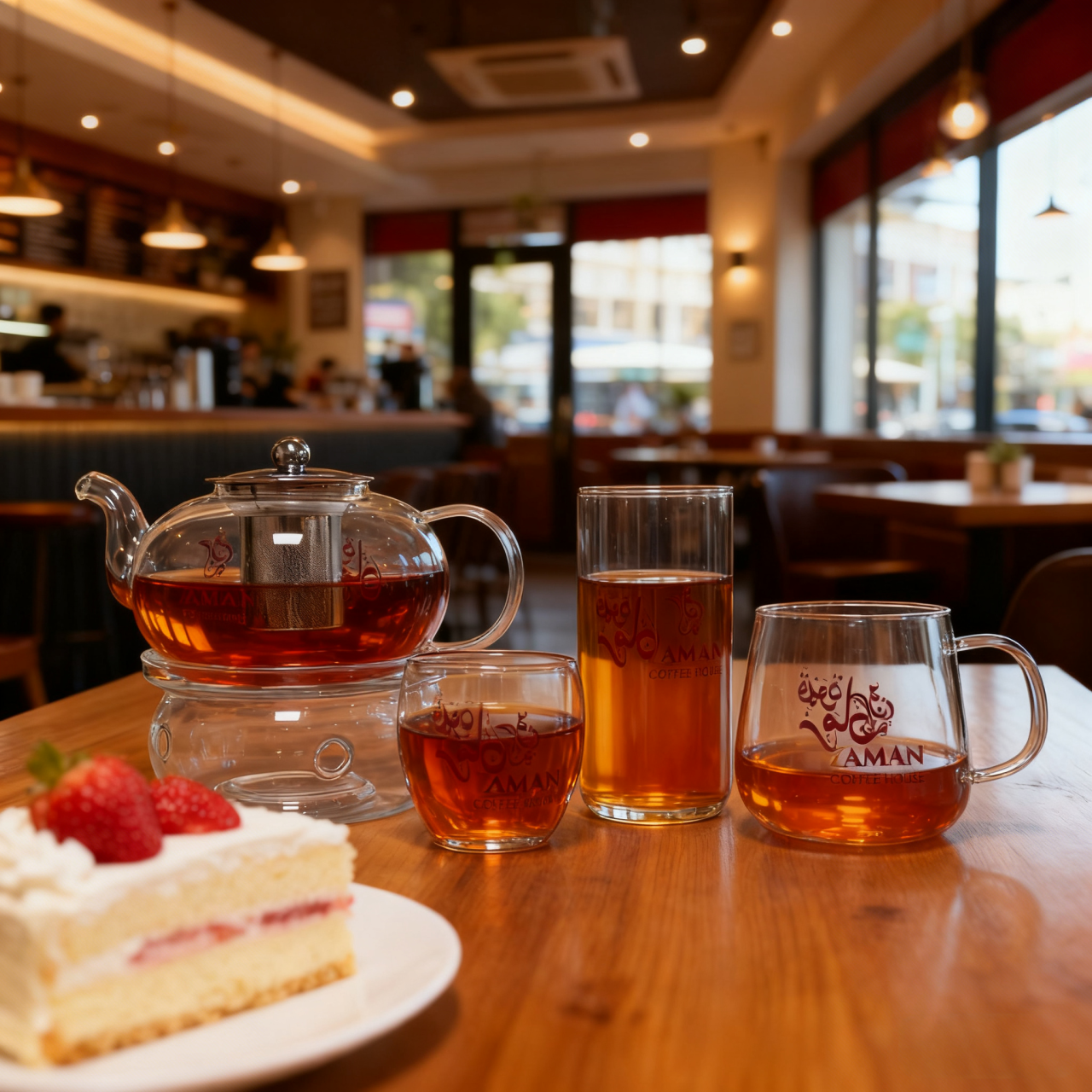
Thermal Shock Resistance: The Core Advantage of Borosilicate Glass Teapots
How borosilicate glass withstands rapid temperature shifts (e.g., 0°C to 150°C in <5 sec)
Borosilicate glass is engineered to handle extreme thermal swings that would shatter ordinary glass. Its low linear thermal expansion coefficient—typically around 3.3 × 10⁻⁶ /°C (ASTM C1494, 2021)—means it expands or contracts minimally when heated or cooled. This allows a high-quality borosilicate glass teapot to transition safely from ice water at 0 °C to freshly poured boiling water at ~150 °C in under five seconds. The stability arises from its robust silicon–oxygen network, reinforced with boron oxide, which distributes thermal stress evenly across the vessel. Unlike metal or ceramic, the teapot remains fully transparent during thermal shock—enabling real-time observation of infusion without distortion or clouding. Laboratory cycling tests confirm that repeated freezer-to-stovetop transitions do not degrade structural integrity. Rapid heat transfer also minimises thermal lag, ensuring leaves steep at target temperature from the first pour—a responsiveness tea experts credit with preserving volatile aromas often lost in slower-warming materials. This durability translates directly into longer service life and consistent, safe performance for precision brewing.
Borosilicate vs. soda-lime: Quantifying thermal delta limits (≥160°C vs. ≤40°C ΔT) and real-world failure risks
Borosilicate glass teapots vastly outperform soda-lime alternatives on thermal shock resistance—the defining metric being maximum allowable temperature differential (ΔT) before fracture. Standard borosilicate formulations reliably withstand ΔT ≥160 °C; soda-lime glass fails at ΔT as low as 40 °C (Glass Science and Technology, 2020). Pouring boiling water into a room-temperature soda-lime teapot therefore carries immediate cracking risk—especially if micro-scratches are present. The same action poses no threat to borosilicate. Real-world data from commercial kitchens show soda-lime glassware breaks five to eight times more frequently under repeated thermal cycling. Borosilicate’s resistance to cumulative thermal degradation means it retains structural integrity after thousands of heating–cooling cycles, while soda-lime develops microcracks that escalate into sudden, hazardous failure. This quantifiable reliability ensures both safety and brew purity—making borosilicate the material of choice for professional-grade brewing tools.
Precision Brewing Performance Enabled by Transparent, Stable Glass Teapots
Real-time visual steeping control and optimal infusion timing for delicate teas
The optical clarity of borosilicate glass transforms brewing into an observable, precise practice. As leaves unfurl and liquor evolves—from pale yellow to golden amber—you see extraction unfold in real time. This visual feedback is indispensable for delicate teas like silver needle white or first-flush Darjeeling, where oversteeping by even 10 seconds can convert floral nuance into bitterness. Because borosilicate remains dimensionally stable during rapid thermal shifts, you can confidently perform a quick 85°C rinse and proceed to steep without risk of cracking. Transparency eliminates reliance on timers alone: instead, you assess readiness by color depth, leaf buoyancy, and sediment behavior. With this direct sensory input, you stop the steep precisely at peak infusion—locking in aromatic complexity and a clean, balanced finish.
Enhanced flavor extraction: Data-backed comparison of L-theanine and catechin release in green tea brewed in borosilicate glass teapots vs. ceramic
Teapot material measurably affects the extraction of key bioactive compounds. A controlled trial published in the Journal of Food Science (2022) compared sencha green tea steeped for two minutes at 80°C in borosilicate glass versus unglazed stoneware ceramic teapots. Results showed consistently higher yields in glass:
| Compound | Glass Teapot (mg/100 ml) | Ceramic Teapot (mg/100 ml) | Increase with Glass |
|---|---|---|---|
| L-theanine | 21.4 | 18.9 | 13.2% |
| Total catechins | 124.7 | 108.3 | 15.1% |
| EGCG (key catechin) | 68.2 | 59.6 | 14.4% |
This difference stems from borosilicate’s non-porous, chemically inert surface—which neither adsorbs nor reacts with solubles. In contrast, unglazed ceramic can retain trace amounts of polyphenols and amino acids, subtly dampening umami richness and altering astringent balance. Higher L-theanine extraction enhances mouthfeel smoothness, while elevated catechin levels preserve the brisk, antioxidant-rich character essential to quality green tea. For precision brewing, a borosilicate glass teapot delivers not only visual control but also a more complete and authentic expression of the leaf’s biochemical profile.
Material Safety and Chemical Inertness: Why Glass Teapots Are Ideal for Pure, Uncompromised Brews
NSF/ANSI 51 Validation: Leaching Resistance Across pH 2.5–8.5 (Citrus Infusions, Aged Pu-erh, and Alkaline Herbal Decoctions)
Chemical inertness is foundational to a pure brewing experience—and borosilicate glass meets the highest benchmark for food-contact safety. It is certified to NSF/ANSI 51, the gold standard for materials used in commercial food equipment, confirming zero leaching across an exceptionally broad pH range: from highly acidic citrus infusions (pH 2.5) to alkaline herbal decoctions (pH 8.5), including complex, aged pu-erh teas. This validation ensures the teapot introduces no metallic, plastic, or mineral contaminants—no matter the brew’s acidity, tannin load, or infusion duration. Whether steeping bright lemon-ginger blends or earthy, microbial-rich pu-erh cakes, the glass acts solely as a passive, impermeable vessel. The only compounds entering your cup are those intentionally extracted from the tea itself—guaranteeing fidelity of flavor, aroma, and functional integrity.
FAQ
What is the main advantage of borosilicate glass teapots?
Borosilicate glass teapots excel in thermal shock resistance, withstanding rapid temperature changes without cracking, ensuring durability and safe brewing performance.
Can borosilicate glass teapots go from freezer to stovetop?
Yes, borosilicate teapots are designed to endure extreme temperature transitions, such as moving from ice water to boiling temperatures without structural degradation.
How does borosilicate glass enhance green tea flavor extraction?
Borosilicate’s non-porous surface prevents absorption or chemical interaction, allowing higher yields of key compounds like L-theanine and catechins in green tea.
Are borosilicate glass teapots safe for acidic or alkaline infusions?
Borosilicate glass is chemically inert and NSF/ANSI 51 certified, ensuring no leaching across a wide pH range, including acidic or alkaline brews.
Why are borosilicate teapots preferred over soda-lime glass?
Unlike soda-lime glass, borosilicate can withstand temperature differentials of up to 160°C without fracturing, making it ideal for precision brewing and long-term safety.
Table of Contents
- Thermal Shock Resistance: The Core Advantage of Borosilicate Glass Teapots
- Precision Brewing Performance Enabled by Transparent, Stable Glass Teapots
- Material Safety and Chemical Inertness: Why Glass Teapots Are Ideal for Pure, Uncompromised Brews
-
FAQ
- What is the main advantage of borosilicate glass teapots?
- Can borosilicate glass teapots go from freezer to stovetop?
- How does borosilicate glass enhance green tea flavor extraction?
- Are borosilicate glass teapots safe for acidic or alkaline infusions?
- Why are borosilicate teapots preferred over soda-lime glass?