
 EN
EN



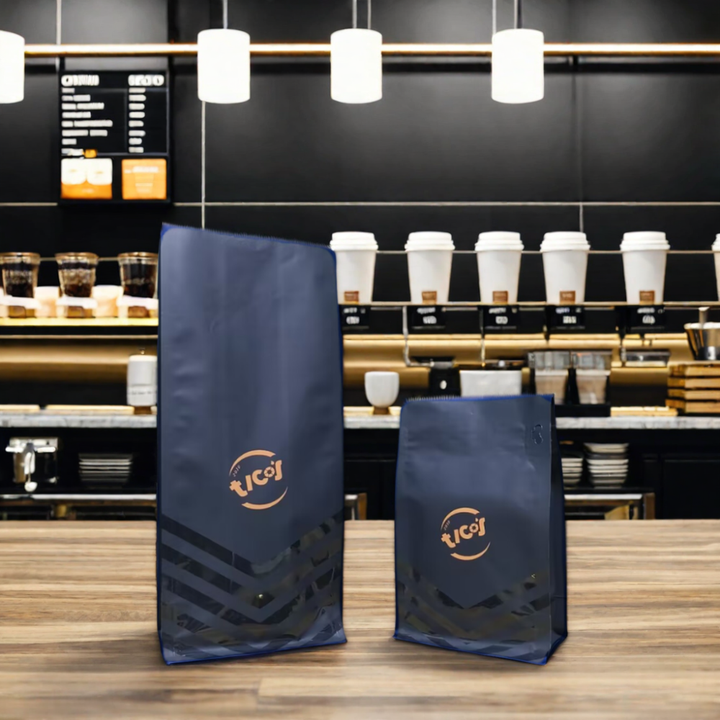
Why Coffee Staling Demands Advanced Barrier Protection
Oxidation: The Core Threat to Aroma, Flavor, and Shelf Life
Oxidation is the primary driver of coffee staling, rapidly degrading the volatile compounds responsible for its distinctive aroma and flavor. Once roasted, coffee beans become highly porous and reactive—especially after grinding—making them acutely susceptible to atmospheric oxygen. Within just 15 minutes of grinding, ground coffee can lose up to 60% of its key aromatic compounds (Specialty Coffee Association, 2023). This chemical deterioration not only mutes sensory complexity but also accelerates rancidity in the coffee’s natural oils, drastically shortening usable shelf life. High-barrier coffee packaging bags—featuring laminates with oxygen transmission rates (OTR) below 0.1 cc/m²/day—are essential to limit oxygen ingress and preserve freshness for weeks or months. Without such protection, even premium single-origin beans begin to stale within days, confirming that oxidation control remains the cornerstone of quality preservation.
Secondary Degradation Factors—Moisture, Light, and CO₂ Loss—in Coffee Packaging Bags
Beyond oxygen, three secondary factors further compromise coffee quality: moisture uptake, light exposure, and uncontrolled CO₂ release. Moisture content above 12% by weight risks mold growth and accelerates stale flavor development; studies show that even a 1% increase in moisture can halve roasted coffee’s shelf life (SCA, 2022). Ultraviolet (UV) and visible light catalyze photo-oxidation, breaking down lipids and pigments to produce off-flavors and visual dullness. Equally critical is CO₂ management: freshly roasted coffee emits significant volumes of CO₂ over several days. Without a controlled release mechanism, packaging can bulge or rupture. Premium coffee packaging bags integrate one-way degassing valves—designed to vent CO₂ while blocking oxygen re-entry—maintaining structural integrity and preserving an inert micro-environment from roast to cup.
Barrier Film Construction: Materials and Architecture for Optimal Coffee Packaging Bags
Multi‑Layer Laminates: Synergy of LDPE, Aluminum Foil, and Kraft Paper
The most effective coffee packaging bags rely on multi-layer laminates that combine complementary materials to achieve barrier performance exceeding any single layer. A common structure uses kraft paper as the outer layer for its natural aesthetic, tactile appeal, and excellent printability—supporting brand expression without sacrificing function. Beneath it lies a thin aluminum foil layer, delivering near-total resistance to oxygen, moisture, and light—the three principal agents of staling. The inner layer is typically low-density polyethylene (LDPE), selected for its food-contact safety, heat-sealability, and ability to form a leak-proof seal. These layers are bonded via adhesive lamination, ensuring mechanical stability and preserving foil integrity under handling stress. In high-performance formats, PET/Al/PE constructions replace kraft with polyester for enhanced stiffness and moisture resistance—without compromising barrier efficacy.
Performance Comparison: Aluminum Foil vs. Metallized PET vs. High‑Barrier Polymer Films
Choosing the right barrier layer involves balancing protection, processability, cost, and sustainability. The table below compares three widely used options:
| Material | Oxygen Barrier | Moisture Barrier | Light Blocking | Flexibility & Processability | Typical Application |
|---|---|---|---|---|---|
| Aluminum Foil | Excellent; near-zero OTR | Near-zero WVTR | Total | Low; prone to cracking with repeated flexing | Long-shelf-life whole beans, premium products |
| Metallized PET | Very good; OTR 0.1–1 cc/m²·day | Low WVTR | High | Good; lighter and more flexible than foil | Standard-shelf-life ground coffee, mid-tier brands |
| High‑Barrier Polymer Films (e.g., EVOH, PVDC) | Good; OTR 1–10 cc/m²·day | Moderate | Moderate to high (coating-dependent) | High; excellent flex-crack resistance | High-speed form-fill-seal lines, single-serve pods, flexible pouches |
Aluminum foil remains the benchmark for maximum freshness retention. Metallized PET offers a strong balance of barrier performance and cost-efficiency. High-barrier polymers—particularly EVOH-based films—deliver superior flexibility and are increasingly favored where durability under repeated handling is essential.
Four Critical Barrier Functions Enabled by Premium Coffee Packaging Bags
Oxygen Barrier Performance: Measuring OTR and Its Impact on Freshness Retention
Oxygen triggers rapid oxidation of coffee’s delicate lipids and volatiles, eroding aroma and flavor within days. Premium coffee packaging bags counter this using high-barrier films engineered for ultra-low oxygen transmission. Multi-layer laminates incorporating EVOH routinely achieve OTR values below 0.5 cc/m²/day (2023), extending shelf life to 12 months or more while retaining nuanced flavor profiles. Metallized PET layers can further reduce OTR to 0.1–0.3 cc/m²/day in optimized constructions—offering robust protection without foil’s rigidity. Without precise oxygen control, even whole beans lose vibrancy quickly, developing flat, cardboard-like notes after just a few weeks.
Moisture Vapor Transmission Control, UV Light Blocking, and Controlled CO₂ Release
Effective coffee packaging must simultaneously manage moisture, light, and internal gas pressure. Aluminum foil-based laminates maintain moisture vapor transmission rates (MVTR) below 0.01 g/m²/day—preventing texture degradation and microbial risk. Opaque layers like kraft paper or metallized films block UV radiation, inhibiting lipid oxidation and color fading. Meanwhile, integrated one-way degassing valves allow CO₂ emitted during post-roast outgassing to escape without permitting oxygen ingress—keeping the bag sealed and concave. This tripartite defense creates a stable, inert microclimate that safeguards coffee integrity across the entire supply chain.
Selecting the Right Barrier Film for Your Coffee Packaging Bag Strategy
Choosing the optimal barrier film requires aligning technical performance with product needs, distribution realities, and brand values. Ground coffee loses aroma up to 40% faster than whole beans due to dramatically increased surface area—demanding higher barrier performance for equivalent shelf life. For premium single-origin roasts targeting 12-month shelf life, near-zero OTR is non-negotiable. Locally distributed, fast-turnover beans may succeed with slightly higher permeability—provided degassing valves and tight inventory control are in place.
The table below compares four established barrier technologies by core performance metrics and strategic trade-offs:
| Barrier Material | Typical OTR (cc/m²/day) |
Moisture Vapor Barrier | Light Blocking | Relative Cost | Sustainability Profile |
|---|---|---|---|---|---|
| Aluminum Foil Laminate (e.g., PET/AL/PE) | <0.001 | Excellent | Complete | High | Poor – non-recyclable multi-material |
| Metallized PET (Met‑PET) | 0.05–0.5 | Good | Very high | Medium | Limited – metal layer hinders recycling |
| High‑Barrier Polymer (EVOH‑based) | 0.01–0.1 | Moderate–Good | Transparent (UV blocker needed) | Medium‑Low | Recyclable if mono-material structure is used |
| Compostable High‑Barrier Film (e.g., plant‑based metallized) | 0.1–0.3 (emerging) | Good | High | High (currently) | Industrially compostable; improving |
OTR values reflect typical ranges at 23°C/50% RH; actual performance depends on thickness, laminate design, and environmental conditions.
Degassing valve compatibility is another decisive factor. Aluminum foil laminates provide the most reliable foundation for valve integration—ensuring no hidden leakage paths compromise the oxygen barrier. Emerging recyclable polymer structures now support validated valve performance, though rigorous testing remains essential. Resealable closures—zippers or tin-ties—are frequently applied atop these high-barrier films; their thermal and pressure seal integrity must be verified under real-world use conditions.
Sustainability is reshaping selection criteria. High-barrier compostable films now match metallized PET’s OTR, supporting medium-term shelf life—though cost premiums persist. Roasters pursuing eco-certifications increasingly adopt plant-based metallized barriers or nanoclay-reinforced bio-polymers to replace traditional foil without sacrificing core protection. Regardless of material choice, accelerated aging tests under elevated temperature and humidity remain indispensable before commercial launch. The right barrier film is ultimately the one that delivers measurable freshness, meets operational constraints, and reflects brand commitments—validated through disciplined, evidence-based evaluation.
FAQ
What is coffee staling?
Coffee staling refers to the loss of flavor, aroma, and overall quality of coffee over time due to exposure to factors like oxygen, moisture, light, and improper packaging.
Why is oxygen so harmful to coffee freshness?
Oxygen accelerates the oxidation of coffee’s volatile compounds and natural oils, leading to loss of aroma and flavor, and causing rancidity.
What are high-barrier coffee packaging bags?
High-barrier coffee packaging bags are designed with multi-layer laminates and advanced materials that limit oxygen ingress and preserve coffee freshness for extended periods.
What is the role of degassing valves in coffee packaging?
Degassing valves release CO₂ emitted by freshly roasted coffee while preventing oxygen from entering, maintaining freshness and packaging integrity.
Are aluminum foil-based laminates recyclable?
No, aluminum foil-based laminates are typically not recyclable, as they combine multiple materials that are challenging to separate.
What should I consider when choosing coffee packaging films?
Consider factors like oxygen barrier performance, moisture resistance, light blocking, cost, sustainability, and compatibility with degassing valves and resealable closures.