
 EN



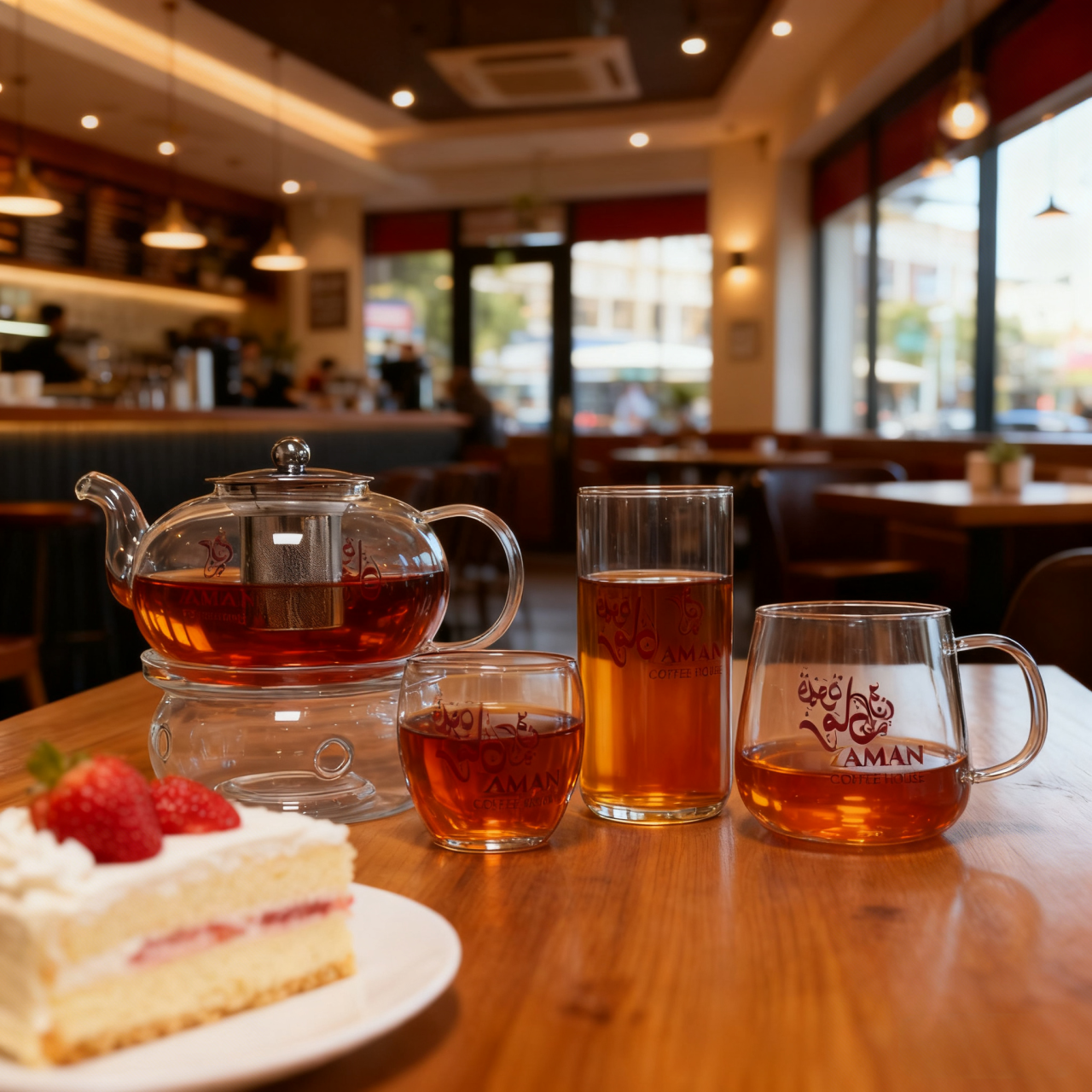
Why Borosilicate Glass Is the Only Reliable Choice for a Dual-Use Glass Teapot
Thermal shock resistance: Handling boiling water, flash-heated tea, and pour-over coffee without cracking
A true dual-purpose glass teapot must transition seamlessly between steeping delicate green tea at 80°C and brewing concentrated pour-over coffee with 96°C water. Ordinary soda-lime glass frequently fails under these demands: sudden temperature shifts cause uneven expansion, concentrating stress at structural weak points like the spout or handle junction. Borosilicate glass eliminates this risk through its exceptionally low coefficient of thermal expansion (CTE). When boiling water contacts a room-temperature borosilicate carafe, the material absorbs the thermal gradient uniformly—without forming micro-fractures. Third-party lab simulations confirm borosilicate vessels routinely withstand differentials exceeding 120°C, covering real-world use cases such as rinsing a chilled infuser basket with near-boiling water or flash-heating cold-brew concentrate. This inherent toughness also supports advanced barista techniques—like pulse pouring directly onto the glass walls—a practice that would shatter tempered alternatives in a single service.
How borosilicate’s low CTE (3.3 × 10⁻⁶/K) enables safe 120°C temperature differentials — essential for real-world glass teapot use
Thermal safety hinges on uniform expansion during heating. Borosilicate glass has a CTE of just 3.3 × 10⁻⁶/K—roughly one-third that of standard soda-lime glass. This near-zero expansion means even localized heating (e.g., boiling water contacting part of the wall while adjacent areas remain cool) generates stress well below the fracture threshold. As a result, the vessel safely tolerates a 120°C temperature differential—the margin needed to accommodate the full 70–100°C gradients encountered when switching from cold rinsing to high-heat extraction. This property has been validated for decades in laboratory glassware like beakers and test tubes, where controlled expansion is foundational to reliability. For users requiring one carafe to serve both chilled tisanes and high-temperature coffee blooms, no other transparent material delivers equivalent clarity, chemical stability, and thermal resilience.

Soda-Lime vs. Tempered Glass Teapots: Hidden Trade-Offs in Safety and Performance
Brittle failure risk: Why 73% of cracked glass teapots in NSF’s 2023 Beverage Appliance Survey were soda-lime
Soda-lime glass dominates the low-cost teapot market—but its failure rate in hot beverage service is stark. According to the National Sanitation Foundation’s 2023 Beverage Appliance Survey, 73% of all cracked glass teapots were made from standard soda-lime material. The root cause lies in its high CTE (~8.6 × 10⁻⁶/K): when boiling water hits a room-temperature wall, the inner surface expands rapidly while the exterior lags, creating intense shear stress. This stress concentrates at microscopic surface flaws—causing sudden, unpredictable fracture. It’s not fatigue; it’s a single-event thermal failure. Tempered soda-lime glass improves impact resistance by introducing surface compression, but it offers no improvement in thermal shock resistance before failure occurs.
Tempered glass limitations: Reduced clarity, inconsistent reheating, and inability to withstand repeated thermal cycling
Tempering adds surface compression to increase impact strength—but introduces optical distortion. A tempered glass teapot often exhibits subtle ripples or haze, diminishing visual appeal during tea or coffee service. More critically, tempering does not alter the base material’s fundamental thermal properties. Nickel sulfide inclusions—a known manufacturing impurity—can trigger spontaneous breakage weeks after production. Repeated thermal cycling—such as heating for pour-over coffee, then cooling for iced tea—causes progressive micro-chipping at vulnerable edges, gradually weakening the compressive layer. Eventually, the entire vessel may shatter without external impact. For dual-use applications demanding predictable, safe performance across hundreds of temperature swings, tempered glass falls short.
Food-Grade Compliance and Long-Term Safety for Daily Glass Teapot Use
FDA 21 CFR §174–182 requirements and why non-borosilicate glass poses leaching risks above 85°C
FDA 21 CFR §174–182 sets strict limits on indirect food additives, requiring materials like glass teapots to resist chemical migration under hot-water service. Borosilicate glass’s inert silica-boron oxide network ensures extractable levels remain below detection thresholds (<0.05 mg/L), even after prolonged boiling-water contact. In contrast, soda-lime glass begins softening above 85°C, releasing sodium and alkaline residues that can exceed FDA-recommended migration limits. Regular use with near-boiling tea or coffee doesn’t just risk off-flavors and aroma loss—it may contribute to cumulative intake of these leachates. For daily dual-use service, only borosilicate reliably meets 21 CFR’s long-term safety expectations, preserving both flavor integrity and user health.
Practical Selection Criteria for a High-Performance Glass Teapot
Selecting the right glass teapot requires evaluating design and functional details that directly impact daily brewing and service. Beyond material safety, a high-performance vessel must support versatility, durability, and ease of use across tea and coffee applications.
First, confirm the material is exclusively borosilicate glass. This is the non-negotiable foundation for handling thermal shock—from pour-over coffee to repeated boiling-water infusions—without fracture risk.
Second, assess design for durability and ergonomics. An ergonomic handle ensures stable, comfortable grip during precise pouring. A wide opening simplifies loading loose-leaf tea or placing a coffee dripper—and streamlines post-service cleaning. The spout should be precision-engineered to prevent dripping and ensure clean, controlled delivery.
Finally, evaluate functional components. A removable stainless steel infuser is essential for controlled steeping and rapid removal to avoid over-extraction. For stovetop compatibility, verify the specific model is explicitly rated for direct, low-flame heating—this feature is not universal among borosilicate teapots.
By prioritizing these criteria—borosilicate construction, thoughtful ergonomics, and modular functionality—you secure a versatile, long-lasting glass teapot engineered for years of reliable dual-use service.
FAQ
What makes borosilicate glass ideal for glass teapots?
Borosilicate glass has a low coefficient of thermal expansion, making it resistant to thermal shock and able to handle extreme temperature changes without cracking.
Why is soda-lime glass prone to cracking in teapots?
Soda-lime glass has a higher coefficient of thermal expansion, which leads to uneven stress during sudden temperature changes, causing cracking at structural weak points.
Can tempered glass teapots handle repeated temperature changes?
No, tempered glass is prone to weakening over time due to progressive micro-chipping during thermal cycles, eventually leading to spontaneous shattering.
Are borosilicate glass teapots safe for daily use?
Yes, borosilicate glass complies with FDA standards for indirect food additives, maintaining chemical stability even under prolonged use with near-boiling liquids.
What design features should I look for in a glass teapot?
Key features include an ergonomic handle, wide opening for easy cleaning, a precision-engineered spout, and a removable stainless steel infuser for versatility.