
 EN
EN



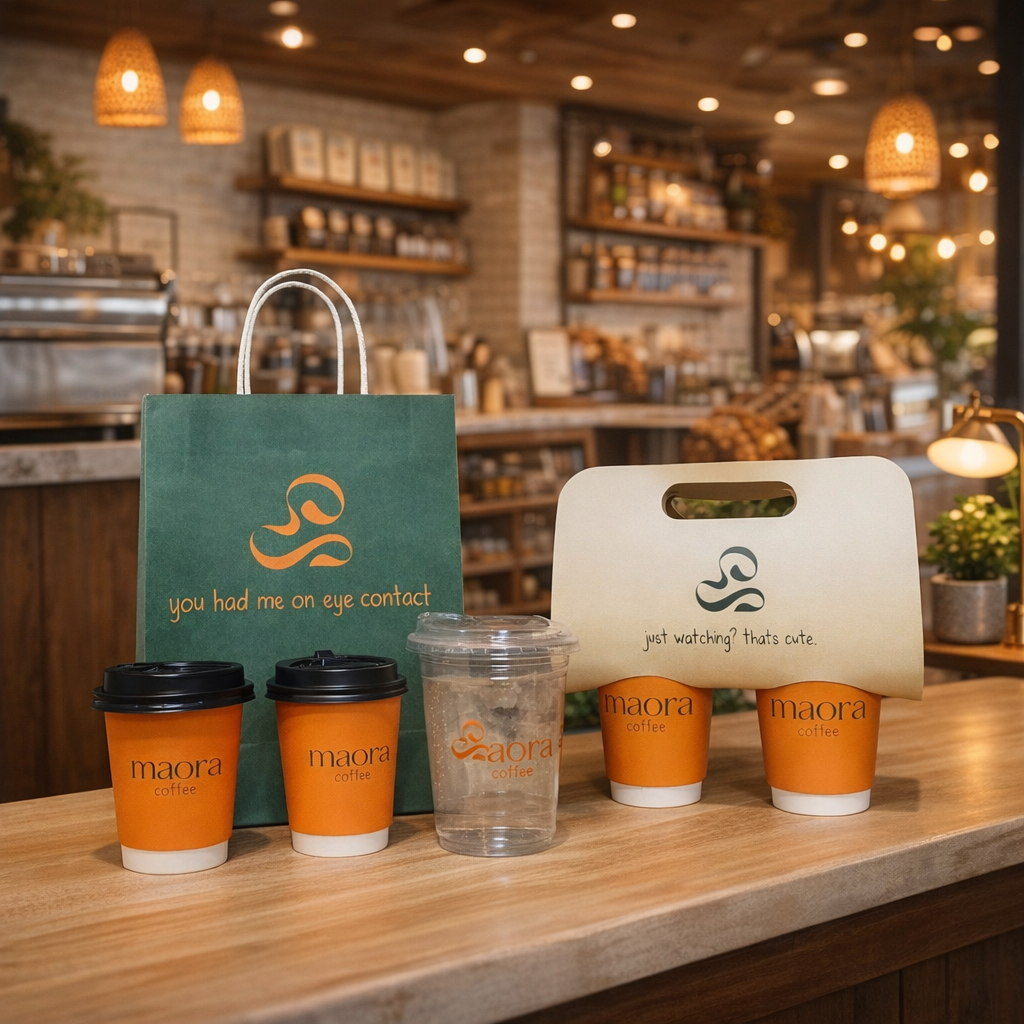
Branded Coffee Cups as High-Impact Brand Touchpoints
How physical cup exposure drives unaided brand recall more effectively than digital ads
Branded coffee mugs actually work better for brand recognition than digital ads according to neuromarketing research. People see these cups all day long while commuting, at work meetings, or hanging out with friends. Digital ads come and go in seconds, but coffee cups stay around for much longer periods. The brain remembers what we see repeatedly in our environment. Studies show that roughly 7 out of 10 people can remember cup designs even weeks after first seeing them, no need to remind them (Journal of Consumer Behaviour, 2023). When something stays visible throughout daily routines, brands get remembered naturally. That kind of lasting presence is pretty hard to match online, which makes physical coffee cups among the best ways companies have to keep their brand front of mind without constant digital bombardment.
Real-world impact: A 2023 cup redesign and its lift in social mentions + dwell time
A major international coffee brand went through a cup redesign in 2023 featuring bigger fonts, matte surfaces, and better insulation properties. Within just three months after launch, social media chatter about their products jumped around 40%. People were holding onto their cups longer too, roughly 22 extra seconds according to store cameras tracking customer behavior (as reported by QSR Magazine last year). The new cups stayed warmer for longer periods which actually cut down how many got tossed aside early by about 18%, meaning customers saw the branding for more time overall. What really made these changes effective wasn't any single element alone, but how all those improvements came together to create something people noticed and wanted to keep using throughout their day.
Design Consistency: Ensuring Brand Integrity Across Every Branded Coffee Cup
The risk of franchise-level inconsistency—and how it dilutes brand equity at scale
When franchises mess around with where logos go, how colors look, or what finishes they use, it really messes with what people think about the brand and slowly chips away at its value. When stores don't stick to consistent designs, customers end up having to figure out what the brand stands for all over again every time they visit somewhere new. This back and forth just makes them confused and less likely to trust the brand. Without someone central making sure everything looks the same everywhere, local managers end up turning potential brand strength into weak recognition that nobody remembers. The numbers back this up too - brands that let their cups look different from place to place see around 60% fewer people coming back (Brand Consistency Index, 2023).
Non-negotiables: Color accuracy, typography fidelity, and tactile finish in branded coffee cups
Three elements must remain non-negotiable across all production runs:
- Color accuracy: Pantone-matched printing ensures signature hues stay instantly recognizable—critical when color is a primary brand identifier.
- Typography fidelity: Precise font rendering preserves legibility and aesthetic cohesion across cup sizes, especially at small scales or curved surfaces.
- Tactile finish: Uniform texture (matte, gloss, or embossed) reinforces premium positioning through physical interaction—making the cup feel as intentional as it looks.
Deviations in any of these compromise not just aesthetics, but credibility: a single off-tone cup can undermine months of strategic brand investment.
Functional Performance: Why Ergonomics and Insulation Shape Procurement Priorities
Consumer behavior insight: 68% discard cups within 90 seconds due to poor heat transfer or grip
Studies indicate that around two thirds of people toss aside their branded coffee cups within just under a minute if they don't stay hot enough (losing more than 15 degrees Celsius per minute) or simply don't fit comfortably in hand - effectively turning expensive marketing materials straight into trash. When customers give up on these cups so quickly, it really cuts down on what companies get back from their investment. Those extra layers inside cups and those rubbery grips on the outside? They're not just there to look good. These features actually work to keep drinks warm longer. Coffee mugs that manage to hold onto most of their heat for twenty whole minutes tend to hang around three times longer in customer hands and cut down on being thrown away by almost half compared to regular cups.
Balancing cost with performance: insulation ratings, print durability, and lifecycle testing
Procurement decisions must be anchored in validated performance—not just unit cost. Three pillars define reliable execution:
- Insulation certification, per ASTM F2650-07 (<5°C temperature drop per 10 minutes at 85°C)
- Print resilience, verified across 50+ dishwasher cycles without fading or cracking
- Structural integrity, confirmed via compression testing to 200kg
Leading suppliers now provide lifecycle reports comparing cost-per-use metrics. For example, polypropylene cups with ceramic coating carry a 30% higher upfront cost but deliver 2.5× lifespan versus standard options—reducing annual procurement spend by 19% at scale. Always tie MOQs to performance warranties to de-risk supply chain commitments.
Supplier Partnership Criteria for Reliable, Scalable Branded Coffee Cup Execution
MOQs, lead times, and campaign agility: mitigating supply volatility for seasonal launches
The foundation of agility lies in how suppliers set their terms. When companies can work with low minimum orders, say under 5,000 units, and get products within six weeks or less, they're much better positioned to handle those unexpected surges in demand or launch special edition items. The numbers back this up too - almost 58% of these kinds of product campaigns run into problems because there aren't enough cups available when needed (Supply Chain Digest reported this in 2024). Working with flexible suppliers makes it possible to try out new designs without tying up too much stock in advance. And having access to real time updates on where orders stand helps avoid those frustrating situations where something is supposed to arrive just as the holidays hit but doesn't make it through in time.
Strategic filters: FSC certification, BPA-free compliance, material traceability, and API-enabled inventory
Sustainability and safety are table stakes—not differentiators. Suppliers must demonstrate:
- FSC-certified paperboard (a factor influencing 74% of consumer purchase decisions, per FSC Consumer Insights, 2024)
- BPA-free liners compliant with FDA standards
- Full material traceability from fiber source to finished cup
- API integration with enterprise procurement platforms for automated reordering
Technical validation must include independent lab reports on thermal integrity after repeated dishwasher cycles, third-party verification of ink toxicity limits, and digital dashboards showing real-time stock levels across distribution hubs. These safeguards prevent compliance failures that could trigger recalls—or worse, reputational damage.
FAQ
What makes branded coffee cups more effective than digital ads?
Branded coffee cups are more effective because they have longer visual exposure and remain in the daily environment of consumers, facilitating better unaided brand recall even weeks after initial exposure.
How does cup design consistency influence brand perception?
Design consistency prevents consumer confusion by maintaining a recognizable and trusted brand image. Inconsistent designs dilute brand equity and lead to reduced customer return rates.
What are the key non-negotiables in branded coffee cup production?
Key non-negotiables include color accuracy, typography fidelity, and a tactile finish, all of which contribute to maintaining brand aesthetics and credibility.
Why is good ergonomics and insulation important in branded coffee cups?
Good ergonomics and insulation ensure the cup is comfortable to use and maintains beverage temperature, increasing the duration of brand exposure.
What happens if there is supply volatility in branded coffee cups?
Supply volatility can disrupt seasonal launches and promotional campaigns, highlighting the importance of working with suppliers offering agility in MOQs and lead times.