
 EN



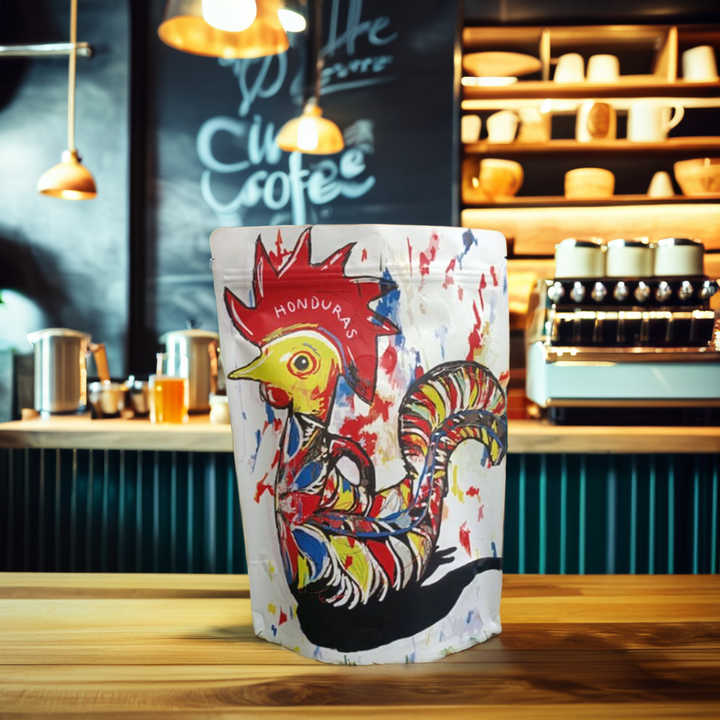
How Kraft Coffee Bags Meet Core Environmental Criteria
Biodegradability and Plastic-Free Composition in Real-World Conditions
Kraft coffee bags can meet core environmental criteria—but only when material composition is fully transparent. Unlined kraft paper is inherently biodegradable and plastic-free, breaking down readily via microbial action in soil and marine environments. Yet pure paper offers negligible oxygen or moisture barrier, making it unsuitable for roasted coffee without protection. Most commercial kraft pouches therefore include an inner lining. For a truly plastic-free claim, that liner must be bio-based and certified compostable under EN 13432 or ISO 14855—standards requiring ≥90% biodegradation within 180 days under industrial composting conditions. Without such certification, a kraft exterior may conceal a conventional plastic film, rendering the entire pouch non-biodegradable in practice. Roasters must verify that the entire structure, not just the outer ply, meets these criteria. Requesting full material disclosure from suppliers remains the most reliable way to confirm real-world performance—and avoid packaging that looks sustainable but isn’t.
Recyclability Without Compromise: Compatibility with Municipal Systems
Recyclability hinges on how kraft coffee bags interact with existing infrastructure. Unlined kraft paper is widely accepted in curbside paper streams—but because roasted coffee demands robust barrier protection, unlined formats are rarely used commercially. When laminated with polyethylene or foil, most municipal material recovery facilities (MRFs) cannot separate the layers, leading to rejection or downcycling. True recyclability without compromise requires water-based barrier coatings or high-yield repulpable structures designed to disperse cleanly in standard paper mill pulpers. Repulpability testing and fiber yield data help validate compatibility. Roasters should ask suppliers for evidence of recycling pathway validation—not assumptions based on appearance. Doing so reduces wishcycling, prevents contamination of paper streams, and supports genuine circularity in municipal systems.
Sustainable Sourcing: FSC® Certification and Low-Impact Forestry
Kraft coffee bags are only as sustainable as the forests they come from. Forest Stewardship Council® (FSC®) certification provides a decisive, third-party verified foundation for responsible sourcing. Its standards mandate ecosystem protection, deforestation prevention, conservation of high-value areas, and respect for workers’ rights and Indigenous communities. With over 220 million hectares of FSC®-certified forest globally, roasters have a scalable, auditable path to low-impact forestry.
FSC®-Certified Kraft Paper and Its Role in Responsible Coffee Supply Chains
FSC®-certified kraft paper strengthens responsible coffee supply chains through chain-of-custody (CoC) traceability—from responsibly managed forest to finished pouch. This system prevents uncertified fiber from entering production, reducing greenwashing risk and supporting carbon sequestration through forest conservation and reforestation. While FSC® certification doesn’t resolve end-of-life challenges like barrier coating disposal, it delivers credible assurance on the origin of the paper. Labels—including FSC 100%, FSC Recycled, and FSC Mix—offer roasters flexibility to align packaging choices with specific sustainability goals. This transparency directly supports consumer demand for eco-conscious products and enables authentic, substantiated claims about supply-chain responsibility.
Performance Reality Check: Shelf Life, Barrier Function, and Compostability Limits
Moisture and Oxygen Barrier Trade-Offs in Uncoated vs. Bio-Based Laminated Kraft Coffee Bags
Uncoated kraft offers strong environmental appeal but virtually no protection against oxygen or moisture—causing rapid staling. It’s viable only for ultra-short distribution windows: typically under 30 days in dry, cool conditions. Bio-based laminated kraft improves moisture resistance and provides partial oxygen blocking, extending shelf life to 3–6 months—still significantly less than the 12 months achieved with conventional high-barrier laminates. Recyclable polyethylene liners fall in between at ~9 months. That gap matters: stale coffee drives food waste, undermining the packaging’s environmental benefit. Compostable films can also become brittle or micro-crack during humidity shifts, affecting seal integrity and transport resilience. For local café or farmers market channels with fast turnover, bio-laminated pouches often perform well. For national retail or e-commerce—with longer lead times and variable handling—unlined kraft is not a viable option.
Industrial Composting Requirements vs. Home Composting Feasibility
Most bio-based laminated kraft coffee bags are certified for industrial composting only. These facilities maintain precise heat, moisture, and microbial activity—conditions backyard compost piles rarely achieve. Even where municipal industrial composting exists, multi-layer pouches may be screened out due to appearance or contamination concerns. Home composting is generally unreliable for laminated structures: lamination slows degradation, and many certified industrial compostables fail to break down in ambient conditions. Uncoated kraft may decompose at home—but any added film changes that outcome. Roasters must clearly state disposal instructions and avoid claiming home compostability unless the package holds explicit certification (e.g., OK Compost HOME or AS 5810). Matching packaging to actual end-of-life infrastructure—not marketing language—is essential for meaningful sustainability.
FAQ
Are all kraft coffee bags biodegradable?
No, not all kraft coffee bags are biodegradable. For a bag to be truly biodegradable, all parts of its structure, including the liner, must be bio-based and certified compostable under standards like EN 13432 or ISO 14855.
Can kraft coffee bags be recycled?
Unlined kraft paper is recyclable in most curbside recycling programs. However, when a bag is laminated with plastic or foil, it often cannot be recycled in most municipal systems unless the materials are repulpable or have water-based barrier coatings.
What is FSC® certification, and why is it important?
FSC® certification is a globally recognized standard for responsible forestry. It ensures that materials come from sustainably managed forests, protecting ecosystems, preventing deforestation, and supporting the rights of workers and local communities.
Are bio-based laminated kraft coffee bags home compostable?
Most bio-based laminated kraft coffee bags are certified for industrial composting and are not suitable for home composting. Home composting systems typically lack the controlled heat, moisture, and microbial activity required to break down these materials effectively.
How can roasters ensure the sustainability of kraft coffee bags?
Roasters should request full material disclosure from suppliers to verify the recyclability or compostability of the entire bag structure. Additionally, they should confirm certifications like FSC® and seek evidence of compatibility with existing recycling or industrial composting systems.