
 EN
EN



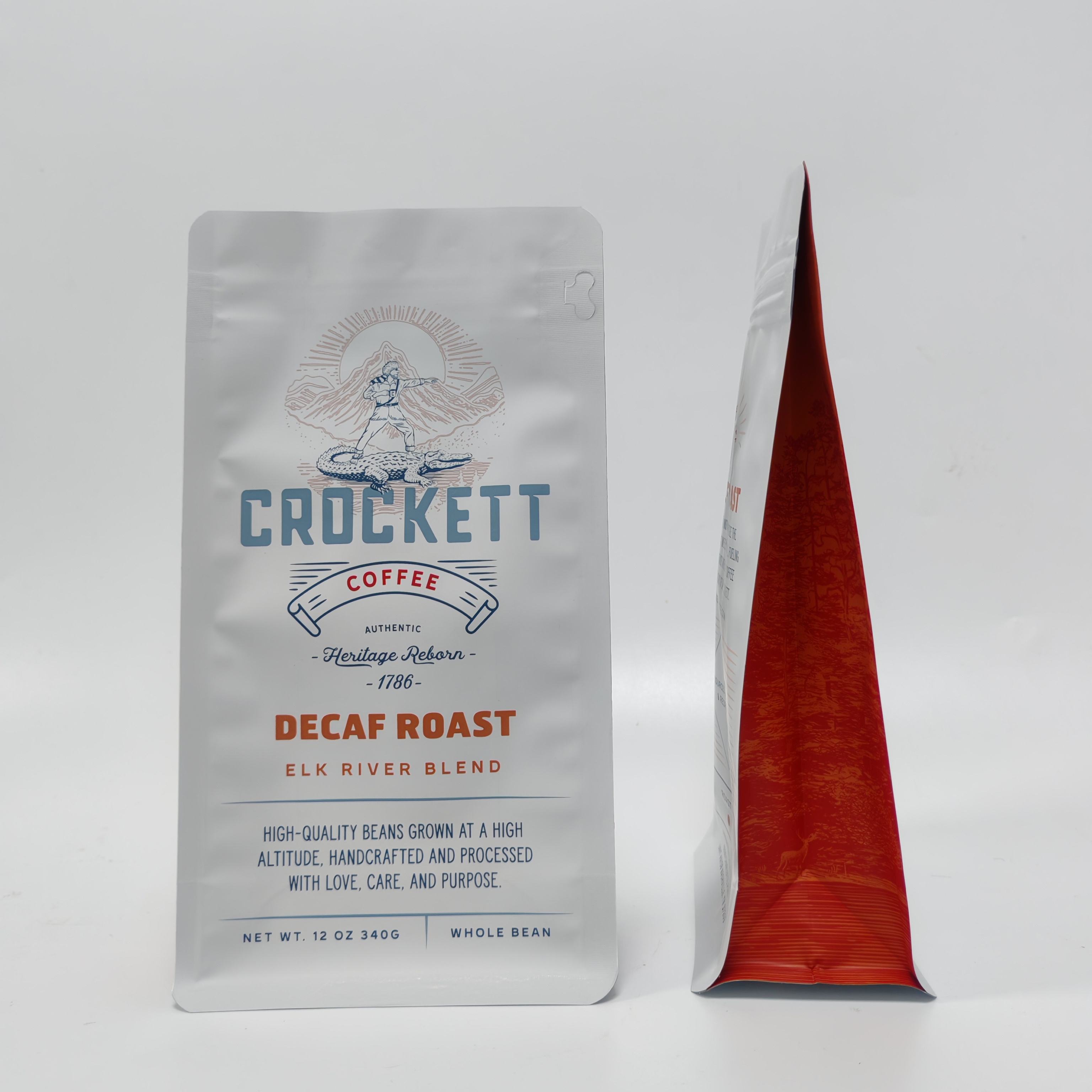
Eco-Friendliness of Kraft Coffee Bags: Sourcing, Degradation, and Certifications
Sustainable packaging choices for coffee hinge on two critical dimensions: responsible material sourcing and real‑world end‑of‑life performance. For kraft coffee bags, certification and decomposition behavior are the benchmarks that move products beyond green claims.
FSC® Certification and Renewable Fiber Sourcing for Sustainable kraft coffee bags
Kraft paper used in coffee packaging is derived from wood pulp—a renewable resource when sourced from responsibly managed forests. The Forest Stewardship Council (FSC) certification provides the most credible assurance of this responsibility, confirming that pulp originates from forests where biodiversity is protected, water resources conserved, and indigenous rights respected. An FSC label on a kraft coffee bag signals that the entire chain of custody—from forest to finished bag—meets rigorous environmental and social standards. This certification remains a key differentiator in a market where “green” claims are often vague. Many suppliers complement FSC‑certified fibers with sustainably managed plantation or agricultural residue fibers, further reducing pressure on virgin woodlands and supporting circular raw material supply—without compromising functional integrity for high‑volume coffee packaging.
Real-World Biodegradability and Industrial Compostability Limits
While kraft paper is inherently biodegradable, its breakdown in real disposal environments is neither automatic nor guaranteed. Uncoated kraft coffee bags can degrade under moist, aerobic conditions—but the process is typically slow and incomplete in home composting or landfill settings. True industrial compostability is defined by strict standards such as EN 13432 (Europe) or ASTM D6400 (U.S.), which require full disintegration within 90–180 days and confirmation of non-toxic residues. Most kraft coffee bags fail these benchmarks because they incorporate synthetic liners or heavy inks that inhibit microbial activity. Even certified compostable bags—bearing the OK Compost or BPI mark—must be processed in dedicated facilities with tightly controlled temperature, humidity, and aeration. Yet access to such infrastructure remains limited across North America and much of Europe. Moisture exposure during collection can also weaken fibers prematurely, causing handling issues and contamination. Without third‑party certification and a well‑managed industrial composting system, the biodegradability of kraft coffee bags remains largely theoretical.
Durability Performance of Kraft Coffee Bags Under Commercial Conditions
For B2B buyers, evaluating the durability of kraft coffee bags under commercial conditions is essential to prevent product loss and maintain brand integrity. Two critical performance dimensions—structural robustness and barrier integrity—determine whether a bag can survive filling, shipping, and shelf life.
Tensile strength, puncture resistance, and roast-weight handling capacity
Kraft paper ranging from 80 to 120 gsm exhibits tensile strength between 5.5 and 8.2 kN/m in the machine direction (TAPPI 2022), enabling resistance to tearing during high-speed automated filling. Puncture resistance values of 3.2 to 4.8 Joules ensure sharp-edged roasted beans do not breach the bag—even under jostling in bulk transport. A well-constructed 100 gsm kraft bag reliably holds 1 kg of whole bean coffee, as validated by drop tests from 1.2 meters (ISTA 2023). For larger 2 kg roasts, manufacturers often reinforce the bottom gusset with an additional 30 gsm ply, boosting load capacity without sacrificing the bag’s natural tactile quality. These quantitative benchmarks give packaging engineers a clear roadmap: match paper grade and gsm to roast weight and common failure modes—such as side-seam splitting or bottom blowout.
Oxygen and moisture barrier efficacy with integrated degassing valves
Uncoated kraft paper alone offers negligible protection against oxygen and moisture. An unlined kraft bag has an oxygen transmission rate (OTR) exceeding 8,000 cc/m²/day—enough to accelerate oxidation and stale coffee within days. In contrast, a PLA-lined kraft coffee bag can reduce OTR to below 100 cc/m²/day (Packaging Engineering 2023). Similarly, untreated kraft allows around 500 g/m²/day moisture vapor transmission (MVTR), while a water-based barrier coating brings it down to 15 g/m²/day. However, fresh coffee emits CO₂, so a one-way degassing valve is essential to prevent ballooning. When integrated effectively, these valves cut oxygen ingress by 82% over a 30-day storage period (Food Packaging Technology 2022), while still venting CO₂. Leading suppliers now offer valves with silicone membranes that open at 3–5 mbar internal pressure—ensuring flat bag profiles and optimal freshness. This combination of coated barrier and precision valve transforms a basic kraft pouch into a viable long-shelf-life package.
Balancing Sustainability and Function: Linings, Coatings, and End-of-Life Realities
PLA, water-based barriers, and recyclability trade-offs in kraft coffee bags
Achieving a genuine balance between sustainability and function requires a critical look at internal linings. While PLA (Polylactic Acid) bioplastic lining supports industrial compostability, it risks contaminating conventional plastic recycling streams if mis-sorted—creating a significant end-of-life challenge. That’s why the industry is shifting toward water-based dispersion coatings, which provide effective oxygen and moisture barriers without compromising the repulpability of the paper fiber—a cornerstone of circularity. The design principle is “fit-for-purpose” durability: matching barrier lifespan to coffee’s shelf life. For instance, a leading packaging manufacturer demonstrated that a water-based coating on their kraft bags achieved a 72% reduction in fossil resource use compared to traditional PE/aluminum laminates—while maintaining a 12-month shelf life for whole beans. This ensures the package protects the product through its intended use, then readily re-enters the paper recycling stream—avoiding the functional longevity that becomes resource-inefficient waste.
Comparative Lifecycle Impact: Kraft Coffee Bags vs. Conventional Alternatives
A 2023 lifecycle assessment comparing kraft paper and plastic packaging found that kraft paper bowls generated roughly 66% fewer CO₂ equivalents than plastic bowls across all stages—from raw material extraction to disposal (Pigment & Resin Technology, 2023). Applied to kraft coffee bags, this advantage stems from renewable fiber sourcing, lower process energy, and avoidance of the fossil‑fuel‑dependent multilayers common in conventional coffee pouches—typically fusing polyethylene, aluminum foil, and polyester into composites that are rarely recycled and usually destined for incineration or landfill. In contrast, kraft‑based packaging achieves a lower carbon footprint while meeting commercial barrier requirements when paired with modern functional coatings—a balance directly aligned with circular economy targets and tightening EU packaging regulations. For B2B buyers, switching to kraft coffee bags reduces Scope 3 emissions and future‑proofs supply chains against rising virgin plastic costs and plastic packaging taxes.
FAQ Section
What is FSC certification, and why is it important for kraft coffee bags?
FSC certification guarantees that the wood pulp in kraft coffee bags comes from responsibly managed forests, ensuring biodiversity protection, conservation of water resources, and respect for indigenous rights.
Can kraft coffee bags be composted at home?
Uncoated kraft coffee bags may degrade under moist aerobic conditions, but the process is slow and often incomplete in home composting settings. Industrial compostability requires specialized facilities.
How do kraft coffee bags protect coffee from oxygen and moisture?
Kraft coffee bags often use PLA linings or water-based coatings to create effective barriers against oxygen and moisture. Degassing valves also help maintain freshness by venting excess CO₂ emitted by coffee beans.
Are kraft coffee bags recyclable?
When paired with water-based barrier coatings, kraft coffee bags can be recycled, as these coatings do not interfere with the repulpability of the paper fibers.
How do kraft coffee bags reduce environmental impact compared to plastic alternatives?
Kraft coffee bags have a lower carbon footprint due to renewable fiber sourcing, reduced process energy requirements, and the absence of fossil-fuel-dependent multilayers common in plastic pouches.
Table of Contents
- Eco-Friendliness of Kraft Coffee Bags: Sourcing, Degradation, and Certifications
- Durability Performance of Kraft Coffee Bags Under Commercial Conditions
- Balancing Sustainability and Function: Linings, Coatings, and End-of-Life Realities
- Comparative Lifecycle Impact: Kraft Coffee Bags vs. Conventional Alternatives
-
FAQ Section
- What is FSC certification, and why is it important for kraft coffee bags?
- Can kraft coffee bags be composted at home?
- How do kraft coffee bags protect coffee from oxygen and moisture?
- Are kraft coffee bags recyclable?
- How do kraft coffee bags reduce environmental impact compared to plastic alternatives?