
 EN
EN



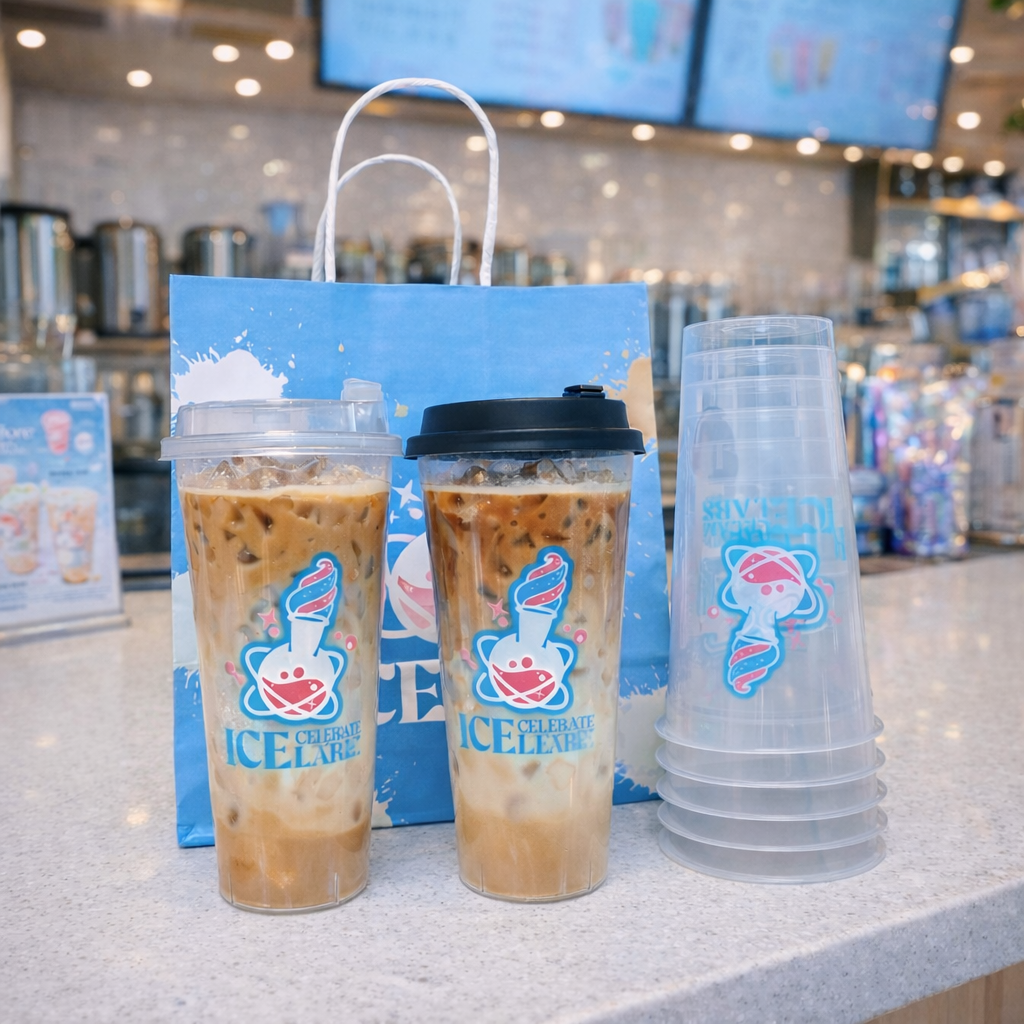
Why Food-Grade Safety for Plastic Cups for Cold Drinks Goes Beyond BPA-Free Claims
The Critical Role of FDA, LFGB, and BfR Compliance in Cold Beverage Applications
When sourcing plastic cups for cold drinks, the BPA-free label is merely a starting point for safety verification. True food-grade integrity demands compliance with rigorous international standards—specifically FDA (U.S.), LFGB (Germany), and BfR (German Federal Institute for Risk Assessment). The FDA regulates overall migration limits and restricts specific additives in food-contact plastics; LFGB goes further by testing for sensory impacts like odor or taste transfer, which directly affect carbonated and flavored cold beverages; and BfR sets stricter compositional guidelines—especially for polymers such as polypropylene (PP) used repeatedly in chilling cycles. A cup that is merely BPA-free may still contain other plasticizers or monomers, including styrene in polystyrene (PS), capable of migrating into cold drinks over extended contact. Verifying conformance to these standards—not just citing them—is essential to ensure performance under real-world refrigeration, ice exposure, and stacking conditions.
Cold Temperature Effects on Chemical Leaching: Why Stability Testing Matters More Than Room-Temp Certifications
Standard room-temperature certification does not predict how a cup performs under refrigeration, freezing, or ice-filled service—conditions where polymer behavior can change dramatically. Cold temperatures can embrittle amorphous plastics like PS, creating microfractures that accelerate chemical migration. Meanwhile, high-clarity PET may undergo increased crystallization at low temperatures, altering molecular structure and potentially affecting additive release over time. A 2022 study on plastic cup stability found that PP maintained migration below 0.1 mg/kg after 48 hours at 4°C, while PS showed a 12% rise in styrene leaching under identical ice-water contact. Suppliers should therefore provide cold-stability test reports—not just migration data collected at 20°C or 40°C—to demonstrate safety during actual use with iced coffee, soda, and juice. This ensures procurement decisions reflect operational reality, not generic lab conditions.
Material Comparison: Selecting the Safest Plastic Cups for Cold Drinks (PP, PET, PS)
Choosing the right polymer is the foundation of safe, functional plastic cups for cold drinks. Polypropylene (PP), polyethylene terephthalate (PET), and polystyrene (PS) each offer distinct trade-offs in clarity, thermal performance, and regulatory acceptance. The table below summarizes their key attributes for refrigerated use.
| Property | PP | PET | PS |
|---|---|---|---|
| Clarity | Translucent | Crystal clear | Transparent but brittle |
| Temperature range | –10 °C to 100 °C | 0 °C to 70 °C | Limited; not for hot |
| Cold impact resistance | Excellent (tough at low temp) | Good (rigid but can crack under stress) | Poor (prone to cracking) |
| Recycling code | #5 | #1 | Varied (limited recyclability) |
| Migration risk under chill | Low – BPA‑free, stable | Low – chemically stable | Moderate – monomer leaching concern |
| Regulatory acceptance | FDA, LFGB, BfR | FDA, LFGB | Varies; less widely certified |
Polypropylene (PP): Clarity, Cold Impact Resistance, and Broad Regulatory Acceptance
PP is a versatile thermoplastic that retains strength and impact resistance even at refrigerator temperatures (–10 °C). Its translucent finish may not match PET’s brilliance, but for operators who need a cup that withstands chilled transport, stacking, and repeated handling without cracking, PP excels. It is inherently BPA-free and meets FDA, LFGB, and BfR requirements for food contact. PP cups are recyclable (#5) and compatible with warm beverages—reducing SKU complexity for multi-temperature operations. For B2B buyers prioritizing durability, flexibility, and consistent regulatory compliance, PP delivers reliable, future-ready performance.
PET vs. PS: Trade-offs in Rigidity, Chilling Performance, and Migration Risk Under Refrigerated Storage
PET delivers the clearest “glass-like” transparency, making it ideal for showcasing iced teas, juices, and sodas. It remains rigid down to 0 °C and poses very low chemical migration risk when stored cold. Its widespread recyclability (#1) supports sustainability goals without compromising safety. Polystyrene, while cost-effective, becomes brittle in cold environments—increasing risks of cracks, flaking, and compromised structural integrity. More critically, PS exhibits higher styrene monomer migration during prolonged refrigeration, raising concerns for high-volume cold-drink programs. For most cold-only applications, PET provides superior safety, clarity, and environmental alignment; PS should be reserved only for low-cost, single-use, short-duration scenarios.
Supplier Due Diligence: Validating Safety Claims with Actionable Documentation
A generic BPA-free claim is insufficient when sourcing plastic cups for cold drinks. Importers must request batch-specific SGS test reports confirming compliance with FDA or LFGB migration limits under chilled conditions. Certificates of conformity should list exact production lot numbers and applicable standards—not boilerplate language. An audit trail—including raw material purchase records, in-process quality checks, and final product testing—enables full traceability from source to shelf. This documentation confirms that food-grade safety is embedded in routine practice, not applied selectively for samples. Prioritize suppliers who deliver complete, itemized verification as standard operating procedure—not as an exception.
Global Sourcing Strategy: Balancing Certification Maturity, Scalability, and Verification Efficiency
Guangdong & Zhejiang (China): High Output Density vs. Need for On-Site or Remote Audit Validation
These provinces dominate global production of plastic cups for cold drinks, offering unmatched scalability and short lead times. However, dense manufacturing clusters also heighten the risk of inconsistent implementation—even among vendors holding valid BSCI or SMETA credentials. Superficial certifications often mask gaps in day-to-day food-grade execution. Therefore, deeper validation—via on-site audits or structured remote video inspections—is essential to verify that safety protocols are sustained across production runs, not just during certification windows.
Vietnam & Thailand: Emerging Capabilities with Accelerating FDA/LFGB Alignment for Plastic Cups for Cold Drinks
Southeast Asian facilities are rapidly closing the regulatory gap. Many now invest specifically in FDA and LFGB compliance for cold beverage applications—driven by lower tariffs, growing export demand, and stronger regional quality infrastructure. While output volume remains lower than Chinese hubs, these markets offer more agile certification pathways and streamlined audit processes. Buyers should prioritize suppliers who provide batch-specific migration test reports validating performance under refrigerated storage—ensuring safety claims align with real-world cold-drink service conditions.
FAQ
What does BPA-free mean for plastic cups?
BPA-free means that the plastic does not contain Bisphenol A, a chemical commonly found in plastics that has raised health concerns. However, being BPA-free does not mean a plastic cup is entirely safe for food contact; other plasticizers or monomers may still pose risks.
Why are FDA, LFGB, and BfR standards important?
These standards provide guidelines for plastic safety in food-contact applications. FDA standards focus on limiting chemical migration, LFGB emphasizes sensory testing, and BfR enforces compositional guidelines. Meeting these standards ensures plastic cups are safe under real-world conditions.
How do cold temperatures affect plastic cups?
Cold temperatures can change the behavior of polymers, potentially increasing chemical migration and causing brittleness. Testing plastic cups under cold conditions ensures they perform safely when used for iced drinks.
What are the benefits of using PP cups?
Polypropylene cups are durable, have excellent cold impact resistance, and meet multiple international safety standards. They are inherently BPA-free and recyclable, suitable for both cold and warm beverages.
Why choose PET over PS for cold drinks?
PET offers superior clarity, safety, and recyclability, and has low chemical migration risk even when stored cold, making it a safer choice for cold beverages compared to PS, which can become brittle and release styrene.
Table of Contents
-
Why Food-Grade Safety for Plastic Cups for Cold Drinks Goes Beyond BPA-Free Claims
- The Critical Role of FDA, LFGB, and BfR Compliance in Cold Beverage Applications
- Cold Temperature Effects on Chemical Leaching: Why Stability Testing Matters More Than Room-Temp Certifications
- Material Comparison: Selecting the Safest Plastic Cups for Cold Drinks (PP, PET, PS)
- Polypropylene (PP): Clarity, Cold Impact Resistance, and Broad Regulatory Acceptance
- PET vs. PS: Trade-offs in Rigidity, Chilling Performance, and Migration Risk Under Refrigerated Storage
- Supplier Due Diligence: Validating Safety Claims with Actionable Documentation
- Global Sourcing Strategy: Balancing Certification Maturity, Scalability, and Verification Efficiency
- FAQ